
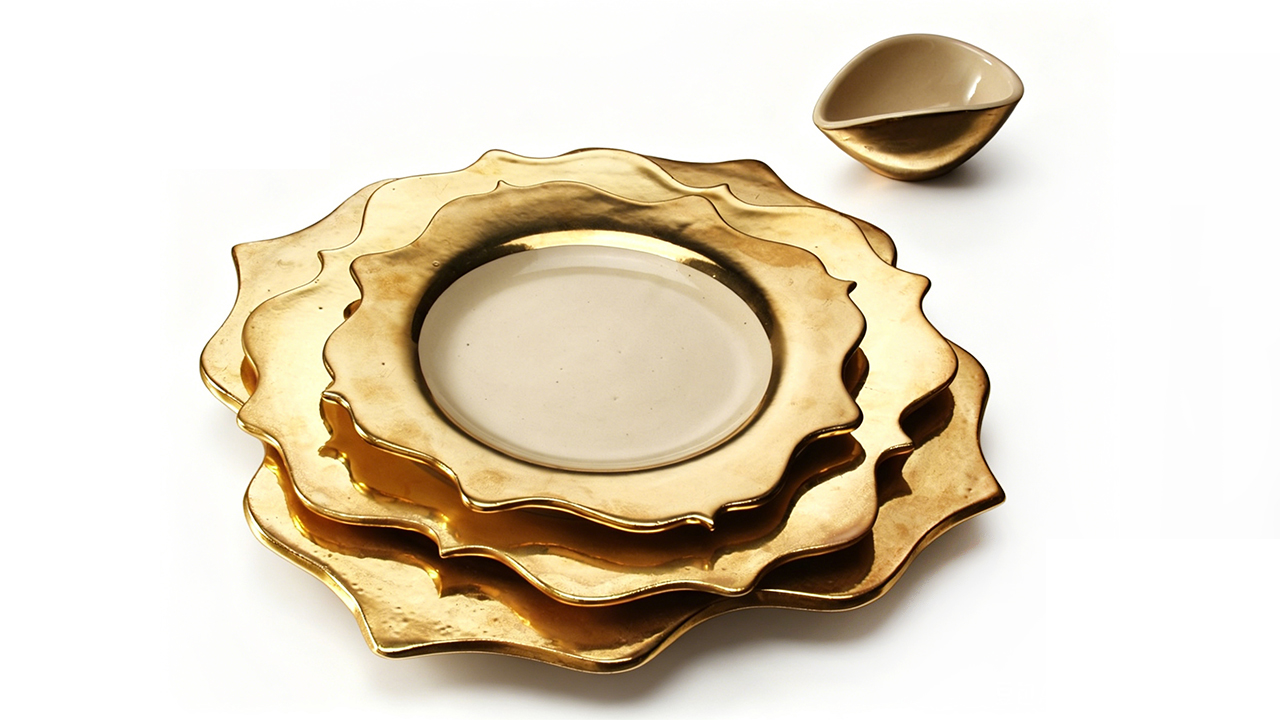

Physical Vapor Deposition (PVD) technology has transcended its traditional industrial roots to become a transformative surface finishing solution for the ceramic industry. Applied to finished ceramic products—including artistic craftworks, premium tableware, and high-end sanitary ware—PVD creates ultra-thin, highly durable, and visually stunning metallic or ceramic compound coatings. This process significantly enhances the aesthetic appeal, functional performance, and commercial value of ceramic items, meeting the demands of modern design, durability, and hygiene.
We apply decorative colors on ceramic items with AIP(arc ion plating) in PVD technology. It produces durable colors, such as golden, silver, etc. The main coatings is TiN(titanium nitride) and it's golden. The raw material is titanium. And for silver color, the raw material can be stainless steel or chrome. The higher vacuum we obtain during PVD coating, the colors will be more bright.
PVD Technologies for Ceramic Products
The non-conductive and heat-sensitive nature of fired ceramics necessitates specific PVD approaches. Magnetron Sputtering is the dominant and most suitable technology.
-
Magnetron Sputtering: This is the primary method used for coating ceramics. The ceramic substrate is placed in a vacuum chamber. A gas (usually argon) is ionized to create a plasma, which bombards a target material (e.g., titanium, zirconium, chromium, silicon). Atoms from the target are ejected and deposit onto the ceramic surface.
-
Advantages for Ceramics: It operates at relatively low temperatures, preventing thermal damage to the ceramic body. It allows for exceptional control over coating color, thickness, and uniformity, even on complex three-dimensional shapes. It enables the deposition of both pure metallic and reactive ceramic coatings (like TiN, ZrN, CrN, or oxides) by introducing reactive gases (N₂, O₂) into the process.
-
Primary PVD Coating Materials and Finishes
PVD offers a versatile palette of finishes impossible to achieve with traditional ceramic glazes alone.
-
Metallic Finishes: Pure metals like titanium, chromium, or stainless steel can be applied to create bright silver, gunmetal, or chrome-like appearances with high reflectivity.
-
Decorative Compound Coatings:
-
Nitrides: Titanium Nitride (TiN - classic gold), Zirconium Nitride (ZrN - brass/rose gold), Chromium Nitride (CrN - silver-gray). These provide rich, durable colors.
-
Oxides: Silicon Oxide (SiO₂) or Titanium Oxide (TiO₂) can be used for transparent protective layers or specific optical effects.
-
-
Multi-layer and Functional Coatings: Advanced stacks can combine different materials to create unique color-shifting effects (e.g., blues, purples, bronzes) or add functionalities like enhanced hardness or specific surface energy.
PVD Equipment Configuration for Ceramics
Equipment is tailored to handle the fragility, variety of shapes, and production volumes typical in the ceramic industry.
-
Batch-Type Coating Systems (Ideal for Craftworks & Small Batches):
-
Description: Versatile vacuum chambers (often rotary or planetary rack systems) that hold multiple pieces. Racks are designed to ensure all surfaces of complex items (like vases or figurines) are evenly exposed to the coating source.
-
Process Flow: Loading -> Vacuum pump-down -> Optional plasma etching/cleaning -> Coating deposition (sputtering) -> Cooling -> Unloading.
-
Advantages: High flexibility for different shapes and sizes; perfect for low-volume, high-mix production like limited-edition art pieces or prototype tableware sets.
-
-
Automated In-line Coating Systems (For High-Volume Tableware & Sanitary Ware):
-
Description: A series of interconnected vacuum chambers forming a continuous production line. Products are automatically transferred between chambers on specially designed carriers.
-
Core Modules: Load-lock, plasma pre-treatment chamber, multiple sputtering deposition chambers (each with different targets for color or layer sequencing), cooling chamber, and unload-lock.
-
Advantages: Very high throughput and consistent quality for standardized items like plates, mugs, or faucet handles; excellent process repeatability; lower per-unit cost at scale.
-
Benefits and Value Propositions
-
Superior Aesthetics & Design Freedom: PVD provides a limitless spectrum of permanent, fade-resistant metallic colors and effects (satin, polished, matte) that are difficult or impossible to achieve with ceramic pigments or electroplating. It enables stunning decorative accents and full-surface luxury finishes.
-
Exceptional Durability & Wear Resistance: The coating is highly resistant to scratches, abrasion, tarnishing, and corrosion. This is crucial for tableware subjected to daily washing, cutlery contact, and for sanitary ware exposed to water, cleaners, and frequent handling.
-
Enhanced Hygiene & Cleanability: PVD coatings are extremely dense and non-porous, preventing the adhesion of dirt, bacteria, limescale, and soap residues. Surfaces become easier to clean and maintain, a critical advantage for sanitary products.
-
Food Safety & Biocompatibility: For tableware, PVD coatings (especially certain nitrides and pure metals) are inert, non-toxic, and fully compliant with international food contact regulations (e.g., EU, FDA). They do not leach metals or react with food.
-
Environmental Sustainability: PVD is a dry, vacuum-based process that generates minimal waste compared to traditional electroplating, which uses hazardous chemicals and produces toxic wastewater.
Applications
-
Ceramic Craftworks & Decorative Items: Luxury vases, sculptures, and tiles with gold, rose gold, or iridescent accents. PVD adds a permanent, precious metal look without the cost or weight of solid metal.
-
Premium Ceramic Tableware: Plates, bowls, and mugs with elegant metallic rims, bases, or patterns. Coffee cup handles or entire espresso cups coated for thermal and aesthetic properties. High-end cutlery handles.
-
Sanitary Ware & Bathroom Fixtures:
-
Ceramic Taps/Faucets: Spouts, handles, and levers with durable, color-stable PVD finishes (e.g., matte black, brushed nickel, champagne gold) that resist fingerprints, water spots, and harsh cleaning agents.
-
Accessories: Soap dispensers, toothbrush holders, towel rings.
-
Ceramic Basin/Toilet Accents: Integrated decorative strips or highlighted edges.
-