
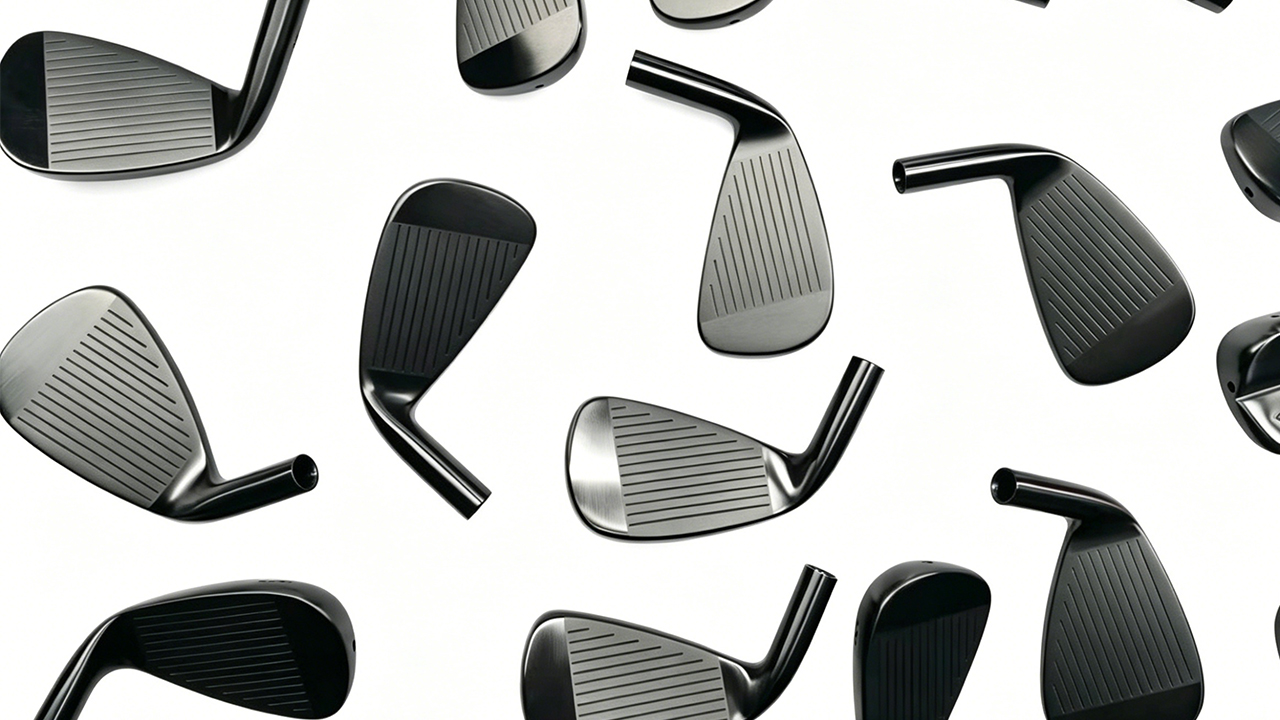
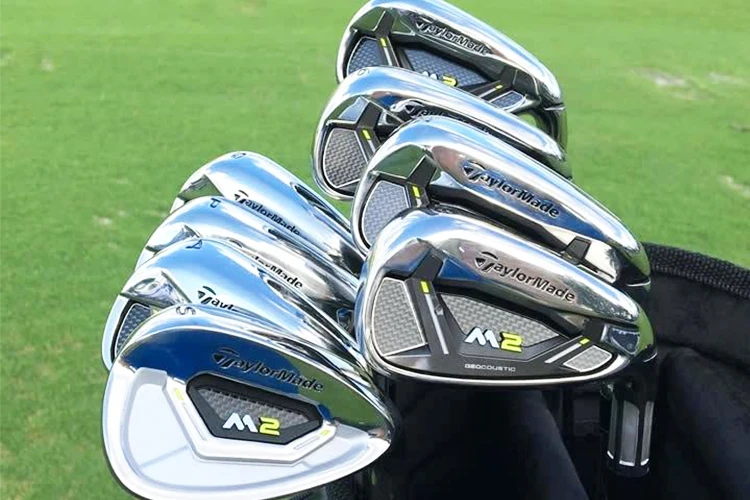
Physical Vapor Deposition (PVD) is a high-performance surface engineering technology widely adopted in the premium sports equipment industry, particularly in the manufacture of golf club heads (drivers, irons, putters) and metal shafts. Conducted in a vacuum environment, PVD involves the vaporization of a solid target material and its deposition as an ultra-thin, exceptionally hard, and durable coating onto the substrate. In golf equipment, PVD serves dual critical purposes: enhancing functional performance and providing advanced, long-lasting aesthetic finishes.
PVD Technologies Applied in Golf Equipment
The golf industry primarily utilizes PVD techniques that ensure excellent adhesion, uniform coverage on complex geometries, and high-quality finishes.
-
Magnetron Sputtering: This method bombards a target material with ionized gas (argon), causing atoms to be ejected and deposited onto the club surface. It is favored for achieving extremely smooth, uniform, and decorative coatings (like various colored TiN or ZrN) with precise control over thickness and color consistency, crucial for high-end aesthetics.
-
Arc Ion Plating: This process uses a high-current electric arc to vaporize the target, creating a highly ionized plasma. It produces coatings with superior adhesion, density, and hardness. It is often employed for functional wear-resistant coatings (like CrN) on striking faces or areas prone to abrasion from sand and soil.
-
Hybrid Processes: Advanced systems may combine sputtering and arc technologies to optimize both aesthetic quality and mechanical properties in a single coating cycle.
PVD Coating Materials for Golf Clubs
The choice of coating is tailored to the component's specific requirements:
-
Nitride-based Coatings (TiN, ZrN, CrN, TiAlN): Provide high hardness, wear resistance, and a spectrum of decorative colors (e.g., gold, bronze, rose gold, black). They protect club heads from scratches, abrasion, and cosmetic wear during play and bag chatter.
-
Diamond-Like Carbon (DLC): Applied for its exceptional low-friction coefficient, high hardness, and sleek black appearance. It is sometimes used on faces of drivers or putters to potentially reduce spin or provide a distinctive, glare-reducing look.
-
Multi-layer & Decorative Stacks: Sophisticated multi-layer PVD coatings are engineered to create unique visual effects, such as subtle gradients, interference colors, or deep, rich tones that anodizing or paint cannot achieve, significantly enhancing product appeal and brand differentiation.
PVD Equipment for Golf Club Manufacturing
Specialized PVD systems are designed to handle the high-mix, high-volume, and quality-sensitive nature of golf equipment production.
-
Vacuum Chamber & Fixturing: Systems feature optimized racking and rotation mechanisms to ensure uniform coating deposition on the complex, three-dimensional shapes of club heads and shafts. Fixtures are designed to minimize shadowing and maximize batch yield.
-
Advanced Process Control: Precise computer control over parameters like temperature (typically lower than for tools to avoid tempering shafts), pressure, bias voltage, and gas flow is critical for achieving repeatable color matches and coating properties across production runs.
-
Pre-cleaning and Etching Stations: Integrated plasma etching is a vital step to thoroughly clean and activate the substrate surface (often stainless steel, titanium, or maraging steel) before deposition, ensuring perfect adhesion of the PVD layer.
-
Decorative & Functional Flexibility: Modern equipment allows for rapid changeover between different coating materials and processes to produce a wide variety of finishes on the same line.
Advantages
-
Superior Durability & Wear Resistance: PVD coatings dramatically increase surface hardness, protecting clubs from scratches, abrasion from sand traps, and general cosmetic deterioration, maintaining "new" appearance longer.
-
Enhanced Aesthetics & Design Freedom: Offers a vast palette of permanent, metallic colors and finishes that are resistant to fading, chipping, and corrosion—unlike paint or plating. Enables distinctive branding and premium visual appeal.
-
Corrosion Resistance: Provides an excellent barrier against sweat, moisture, and environmental elements, protecting the underlying metal, especially important for steel shafts and carbon steel iron heads.
-
Maintained Dimensional Accuracy: The coating is typically only 1-5 microns thick, adding negligible weight and not altering the critical designed performance characteristics of the club head (like center of gravity, moment of inertia, or face flexibility).
-
Potential Performance Benefits: Certain coatings like DLC can offer a slightly lower friction surface on the clubface, which some manufacturers cite as beneficial for ball speed or spin characteristics.
Application
-
Driver and Fairway Wood Heads: Often receive colored PVD coatings (black, gold, dark gray) on the crown and/or body for reduced glare, sleek appearance, and durability.
-
Iron Heads: Particularly cavity-back and players' distance irons, use PVD finishes (e.g., black, bronze, satin) for a premium look, reduced glare at address, and protection against wear.
-
Putters: A major application area where PVD provides a consistent, glare-free, and durable finish (black, nickel, colored accents) that is crucial for visual confidence and long-term putter care.
-
Metal Shafts: Some high-end steel shafts utilize a thin PVD coating for corrosion resistance and a distinctive cosmetic appearance that differs from traditional chrome or satin.