
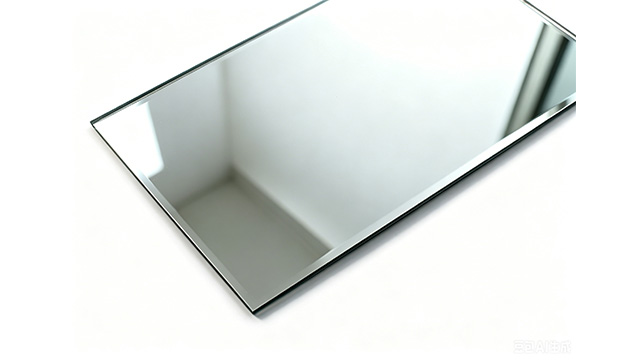

Physical Vapor Deposition (PVD) has become a core technology in the modern glass mirror industry, completely replacing traditional, environmentally harmful wet-chemical silvering processes. By depositing metal or alloy materials in atomic or molecular form onto glass surfaces in a highly controlled vacuum environment, PVD forms uniform, dense, and high-performance thin-film layers to create mirrors. Depending on production scale and product requirements, the process can be implemented using batch-type single machines suitable for small-scale or customized production, or fully automated magnetron sputtering coating lines designed for large-scale, high-efficiency continuous manufacturing. There are two ways to apply reflective mirror finishing on glass. Vacuum metallizing coating also can be used for small batch type vacuum coatings machine for aluminum mirror production. For large output projects, we recommend continuous inline magnetron sputtering systems for silver mirror manufacturing.
PVD Technologies for Mirror Production
-
Thermal Evaporation – Primarily used in single machines/small-scale production:
-
Principle: Under high vacuum, metals such as aluminum are melted and evaporated using resistance heating or electron beam bombardment. The vapor condenses directly onto the glass surface to form a thin film.
-
Features: Relatively simple equipment, lower investment cost, quick process start-up, and easy target material changeover. Ideal for R&D labs, small-batch custom production (e.g., shaped or artistic mirrors), or mirrors with standard reflectivity requirements. Aluminum coating is the typical choice.
-
-
Magnetron Sputtering – Used for large-scale, high-efficiency production and high-performance products:
-
Principle: In a vacuum chamber filled with inert gas (argon), an electric field ionizes the gas to create plasma. High-energy ions bombard a solid target material (e.g., aluminum, chromium, silver, silicon, silicon dioxide), sputtering target atoms that deposit onto the glass surface.
-
Features: Exceptional film adhesion, high density, superior uniformity, and precise controllability. This is the mainstream and preferred technology in large-scale mirror manufacturing today. Crucially, it enables the deposition of multi-layer coating stacks, such as those used in high-performance low-emissivity (Low-E) glass or electrochromic/anti-glare rearview mirrors with specific optical properties.
-
Coating Structures
Modern PVD mirror production has evolved from single metal layers to complex multi-layer structures to enhance performance:
-
Standard Protective Mirror (Aluminum Mirror): Glass + PVD Aluminum Layer + Protective paint.
-
High-Performance Silver Mirror / Low-E Mirror: Glass + Dielectric Base Layer + PVD Silver Layer + Protective Top Layer + Protective paint. The base layer improves adhesion and optical performance, the silver layer provides high reflectivity and thermal properties, and the top layer protects the silver from oxidation and corrosion.
-
Automotive / Rearview Mirrors: Often use chromium-based or specific alloy coatings to achieve desired reflectivity and color neutrality, frequently combined with functional anti-reflection layers.
PVD Equipment Configurations: Batch type Machines vs. Inline system:
A. Small-Scale Production / Batch-Type Single Machines
-
Equipment Description: Typically consists of a vertical or bell-jar type vacuum chamber. A loading rack holds multiple glass sheets for processing in one cycle.
-
Workflow: Loading → Pump-down → Pre-cleaning (optional plasma cleaning) → Layer deposition (thermal evaporation or single-cathode sputtering) → Cooling → Venting → Unloading. After coating, glass is transferred to a separate painting line for back coating and protection.
-
Advantages: High flexibility for different sizes and shapes; lower initial investment; suitable for small orders and frequent product specification changes.
-
Limitations: Slower cycle time, limited throughput; relatively lower automation; higher per-unit cost in large volumes.
B. Large-Scale Production / Continuous Magnetron Sputtering Coating Lines
-
Equipment Description: A highly automated linear production line comprising multiple interconnected vacuum chambers (modules) linked by a transfer system.
-
Core Modules and Process:
-
Loading & Washing Module: Automatic loading and physical/chemical cleaning.
-
Load-Lock / Buffer Chamber: Glass is introduced into the vacuum environment.
-
Pre-Sputtering / Plasma Cleaning Chamber: Final surface cleaning and activation using plasma to ensure optimal adhesion.
-
Multiple Sputtering Deposition Chambers: Each chamber is equipped with one or more rectangular magnetron sputtering cathodes containing different target materials (e.g., metal targets, compound targets for reactive sputtering). Glass substrates pass continuously through each chamber, depositing successive layers to form complex multi-layer stacks. Process gases (Ar, O₂, N₂, etc.) are precisely controlled.
-
Unload-Lock / Buffer Chamber: Coated glass is returned to atmospheric pressure.
-
Quality Monitoring Station: In-line spectrometers or photometers monitor film thickness and optical properties in real time.
-
Automatic Unloading & Downstream Integration: The line is often directly connected to an inline protective paint spraying and curing system, forming a complete integrated process from vacuum coating to back-surface protection.
-
-
Advantages: Very high production efficiency and output (capable of 7x24 operation); excellent film uniformity, repeatability, and consistency; superior process control for complex high-performance coatings; lower per-unit cost at scale; high automation with minimal labor.
Advantages of PVD in Mirror Manufacturing
-
Superior Reflectivity and Optical Performance: Especially with silver-based coatings, reflectivity can exceed 95%.
-
Excellent Durability and Corrosion Resistance: Dense PVD films adhere strongly to glass and, combined with high-quality back paint, offer significantly longer service life than traditional silvered mirrors, withstanding harsh environments such as humidity and salt spray.
-
Environmental Friendliness and Safety: A completely dry process without toxic chemical waste (e.g., silver nitrate, ammonia), complying with stringent environmental regulations.
-
Design Flexibility and Functionality: Enables precise control over coating color (e.g., gray, bronze, blue mirrors), reflectivity, and integration of multiple functionalities like low-emissivity, conductivity, and anti-reflection.
-
High Economic Efficiency (Large-Scale Production): High material utilization (sputtering target utilization can exceed 80%), low energy consumption, and low defect rates make large-scale production highly cost-competitive.
PVD thin-film deposition technology, through its two primary equipment implementations—the flexible batch-type single machine and the high-throughput continuous magnetron sputtering line—provides a comprehensive solution for the glass mirror industry. It is not only an essential choice under modern environmental regulations but also a core technology driving mirror products toward higher performance, multifunctionality, and greater durability. Manufacturers can select the most suitable PVD approach based on their market positioning, capacity needs, product mix, and investment budget, maintaining a competitive edge in a demanding market.