
.jpg)
Customized magnetron sputtering cathodes serve as the cornerstone of modern thin-film deposition technology. From semiconductor manufacturing and optical coatings to medical devices, renewable energy, and aerospace applications, these tailored components enable the production of functional thin films with precise control over thickness, uniformity, composition, and adhesion. The ability to customize every aspect of cathode design—from geometry and magnetic field to power supply and cooling—ensures that each application receives an optimal solution, driving innovation and productivity across virtually every advanced manufacturing sector.
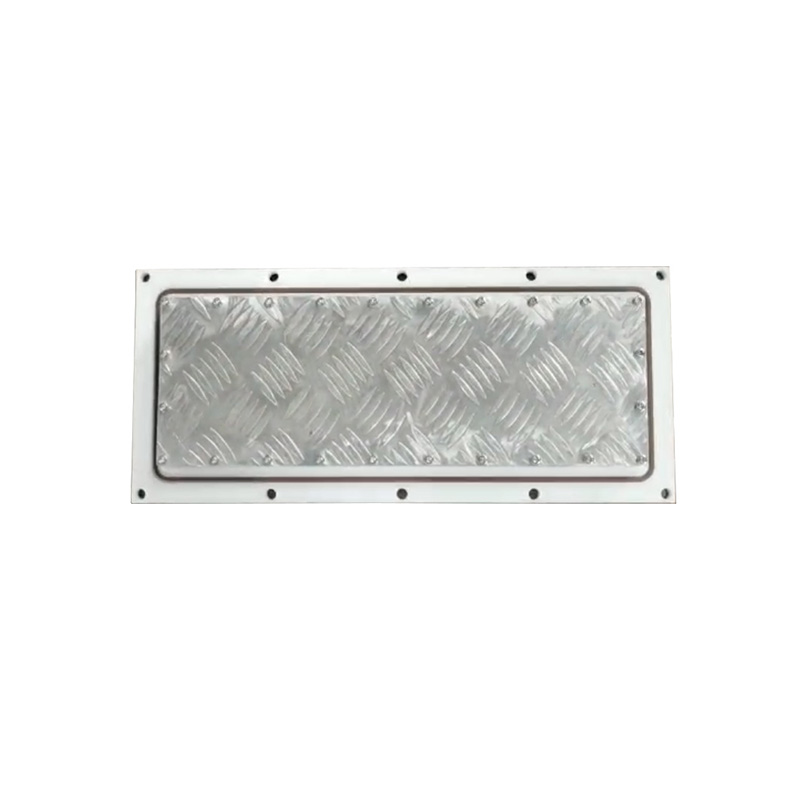
Main Features:
- Easy to install design
- High strength rare earth magnet module
- Compatibility with DC, pulsed DC, MF operation
- High sputtering rate coupled with excellent target utilization
- The sputtering material can be different metals, and silcon
- Integrated argon gas inlet assembly
- Optimized turbulent water flow to provide uniform target cooling
- Low operating pressures
- Flexibility to accept target in 'clamp on' or 'bonded' configuration to cover broad range of thicknesses down to foils
- External or internal mounting optional
- UBM option available in all categories
- UHV compatible sources are also available
- Integrated shutter assembly
Main Applications:
1. Semiconductor & Microelectronics Industry
In semiconductor manufacturing, customized magnetron sputtering cathodes are indispensable for depositing conductive and insulating layers in integrated circuits. They are used to create:
Seed layers for electroplating and subsequent metallization.
Contact electrodes and interconnect metallization.
Dielectric films (SiO₂, Si₃N₄, etc.) for insulation and passivation.
Barrier layers to prevent diffusion between materials.
Custom cathode designs—whether planar, confocal, or inverted cylindrical—enable precise uniformity control on wafers up to 8 inches in diameter, with uniformity as tight as ±2% depending on the material. For power electronics and III-V semiconductor applications, large-area cathodes provide high-rate, highly uniform deposition.
2. Optical Coatings
Customized cathodes are widely used to produce high-performance optical thin films. Applications include:
Anti-reflective (AR) coatings for lenses, displays, and solar cells
Low-emissivity (Low-E) glass for architectural windows
Solar control coatings for automotive and building glass
Optical interference filters and mirror coatings
Transparent conductive oxides (TCO) such as ITO (indium tin oxide) for flat panel displays and touchscreens
Rotatable cylindrical cathodes are particularly favored for large-area glass coating due to their superior target utilization (up to 80%) and stable discharge characteristics. Planar cathodes, on the other hand, offer flexibility for R&D and smaller-scale production.
3. Decorative & Protective Coatings
The decorative and functional coating industry relies heavily on magnetron sputtering cathodes to apply aesthetically pleasing and durable finishes. Common applications include:
Decorative coatings for faucets, door hardware, consumer electronics, and automotive interior/exterior trim
Wear-resistant coatings (TiN, CrN, ZrN, DLC) for tools, molds, and mechanical components
Corrosion-resistant coatings for automotive parts and industrial equipment
Tribological (friction-reducing) coatings to improve component longevity
Cylindrical rotatable cathodes are often preferred for these applications due to their ability to deposit thicker, defect-free coatings over extended production campaigns.
4. Large-Area Glass Coating
Architectural and automotive glass coating represents one of the largest-volume applications for magnetron sputtering cathodes. Customized cathodes enable:
Low-E glass production for energy-efficient buildings
Solar control glass to reduce heat gain
Anti-reflective glass for displays and solar panels
Heated windshield coatings for automotive applications
Inline coating systems equipped with multiple customized cathodes can process glass substrates up to 2.4 × 3.6 meters, achieving high throughput with excellent film uniformity.
5. Photovoltaics & Energy Applications
The renewable energy sector benefits significantly from customized magnetron sputtering cathodes. Applications include:
Thin-film solar cells—deposition of transparent conductive layers (ITO, ZnO) and metallic back contacts (Ag, Mo)
Passivation layers for crystalline silicon solar cells
Anti-reflective coatings for photovoltaic modules
Thin-film batteries and solid-state electrolytes for microelectronic devices
Fuel cell components and electrode materials
RF and DC magnetron sputtering cathodes can be customized to deposit a wide range of materials—from metals and semiconductors to complex oxides—with precise stoichiometric control.
We have dedicated more than 18 years to manufacturing and designing magnetrons that can be rectangular, cylindrical, circular, and of various sizes. They have developed a plethora of targets that can be directly cooled or bonded, and can be manufactured in such a way that can fit most magnetron sizes.
Magnetic fields can essentially define the behaviour and the properties of the ion charged particles that are used for sputtering. The development and commercialisation of software that can enable the distinct modelling of magnetron sputtering is bound to enhance its productivity, applicability, and reproducibility.